A thousand kilometers through Laos in only two weeks
Along the Mekong river
📌 By Jakub Mikula | February 01, 2020
- month of travel: February
In early 2020, my friend John and I embarked on a journey to Laos. As a first-time visitor, I was captivated by the country’s natural splendor. Despite our tight two-week itinerary, which included long overnight rides and hour-long drives, we were continually struck by the breathtaking landscapes and the unspoiled beauty along the rivers. Our journey began in the charming city of Luang Prabang and continued down the Mekong River, where we eventually crossed into Cambodia.
Below, I have outlined the itinerary of our 12-day trip that began in Luang Prabang, Laos, and concluded in Phnom Penh, Cambodia. Despite the fast-paced nature of this trip, I hope this post can serve as a helpful guide when you plan your own itinerary.
(day 1)
Luang Prabang
Upon arriving at Luang Prabang International Airport, the first step was to go through immigration and obtain a visa on arrival. The process was relatively straightforward, requiring a passport-sized photo and payment of a fee based on nationality. Getting the visa was quick, although it did involve waiting in a queue.
Since our hotel was conveniently located close to the airport and our luggage was manageable, we decided to walk and explore the area. This also gave us the chance to eat at a quaint, reasonably priced restaurant away from the overpriced options at the airport terminal.

The city of Luang Prabang sits at the confluence of the Nam Khan River and the Mekong River, both lined with houses, hostels, and a variety of restaurants. The rivers are crossed by many hand-crafted bridges. On our first day, we had no specific plans other than taking a leisurely stroll along the rivers and soaking in the sights and sounds of the city.


For the evening, we planned to catch the sunset and explore the night market. One of the best spots to watch the sunset is from the summit of Phousi Hill. Although the hill can get quite crowded with tourists, a little effort can take you to the quieter edges, where you can enjoy an unobstructed panoramic view. As we reached the summit, the hill revealed a picturesque view of the Mekong River flowing through a mountainous ridge, bathed in the orange hues of the setting sun. It was a truly breathtaking sight.

At night, the city comes alive with vibrant markets and souvenir shops, where you can enjoy a plate of local food and mingle with fellow travelers and friendly locals.


(day 2)
Upon waking up the next morning, the weather was a bit chilly. After a satisfying breakfast near the Mekong River, we set off on a longer walk along the river before returning to our hostel.

Eager to visit the popular Kuang Si Waterfalls, we then rented a scooter and headed south.
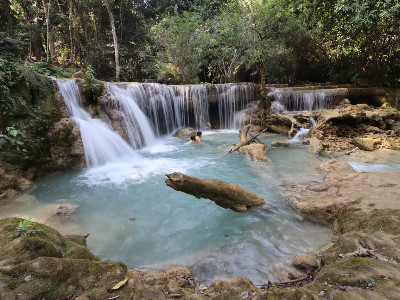
Kuang Si waterfalls
In my opinion, renting a scooter is the best way to reach the waterfalls. For larger groups, hiring a van with a private driver is also an option. However, having your own scooter gives you more freedom to explore the surrounding area and make spontaneous stops along the way.
When we arrived at the car park and paid the small fee, it only took a few minutes of walking through the national park to reach the river.

The park is renowned for its spectacular cascading waterfalls that plunge into the heart of the jungle. The natural pools are perfect for swimming, taking photos, and enjoying the mystical beauty of the lush forest.


(day 3)
On the winding roads
For our third day, we planned to visit the city of Phonsavan. The city is best known for the Plain of Jars, a site containing thousands of large stone jars believed to date back to the Iron Age. The cheapest way to travel there from Luang Prabang is by local bus or minivan. However, the 260 km journey takes around 6 hours and can be quite exhausting. After a cramped and bumpy ride through an otherwise magnificent mountain range, we finally arrived. Some of our fellow passengers were already considering taking a flight for the return trip.
Upon arrival, we immediately booked a tour through our hotel for the following day to visit the Plain of Jars. With the evening free, we decided to explore the small, quiet city. We also had the opportunity to exchange our US dollars, but only bills that were in perfect, undamaged condition were accepted. Out of the many ATMs, only one was working.

As we wandered through the city, we followed the sights and sounds until we eventually ended up at the night market. The evening was chilly, and I was grateful for my warm sweater. The atmosphere at the night market was lively, with plenty of BBQ, hot drinks, and traditional Laotian music.
(day 4)
Plains of Jars
On our informative tour, accompanied by a local guide, we traveled down dusty roads to a village where old aluminum bomb shells were repurposed into souvenirs. After that, we arrived at the Plain of Jars.


The site was filled with massive, seemingly ancient jars carved from rock. They are impressive man-made objects, and there is still no conclusive answer about how they were created.


The Plain of Jars is also known for bomb craters, the result of heavy bombing during the Vietnam War. Some of the craters were massive, and the landscape looked more like the surface of the Moon than the Earth.
(day 5)
Vang Vieng
The manager of our hostel was kind enough to drive us to the local bus terminal in Phonsavan, where we boarded an early morning bus headed for Vang Vieng. There, we stayed in a hostel and shared a dormitory room. This idyllic riverside town is home to a range of water activities, such as kayaking and tubing. Other popular activities include hot air balloon rides and visiting nearby caves.


One of the highlights of the town is its riverside eatery, a floating platform where guests can relax with cold drinks and fresh food while watching the sunset. Unfortunately, we only had one day to spend here. The next day, we took a bus to Vientiane, the capital of Laos, and then boarded a night bus to Pakse.
(day 6, 7)
Along the Mekong river (to Pakse)
The night bus ride is an experience in itself. The upper level of the bus is equipped with large beds, each accommodating up to two people. With the bus fully booked, we ended up sleeping next to a stranger, and the beds were just long enough. For taller people, it might be difficult to stretch out fully. Despite this, I slept surprisingly well and woke up only when we reached Pakse at 5am.
Once there, nothing sounded better than renting a scooter and exploring the surrounding area. That day, we visited Paksong, and in the late afternoon we took a longer ride to the ancient temple of Vat Phou.


The ruins and the temple grounds had an Indiana Jones-like feel, reminiscent of the adventure and mystery depicted in the films.
(day 8, 9, 10)
4000 islands
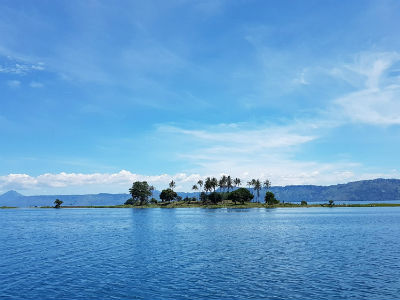
After all the hustle and bustle, we were excited to travel somewhere more tranquil: 4000 islands (Si Phan Don). The islands are located in the south of Laos, where the Mekong River splits into several branches, creating a vast network of channels, rivers, and small islands.


We spent two nights here, riding bicycles, sightseeing, and enjoying the calm and quiet of the place. It was a chance to unwind and recharge.


On our last day, I woke up early to catch the sun rising behind the hills. With our flight approaching, we sat quietly at the breakfast table, watching the morning light shimmer over the calm river. We then packed up, took a boat back to the mainland, and caught another bus to Cambodia.

(day 11, 12)
To Cambodia and back to Singapore
When we took a bus to Cambodia, spent one night in Phnom Penh, and then flew back to Singapore, we had already encountered some temperature checks and noticed people wearing masks at the airport. At the time, we were still unaware of the unprecedented events that would unfold in the following days and months.
In summary, Laos offers a unique blend of culture, history, and natural beauty. The country has a diverse and breathtaking landscape, with the Mekong River playing a central role in shaping both the scenery and the traditional way of life. From majestic waterfalls and towering mountain ranges to ancient temples and archaeological sites, Laos offers a truly unforgettable experience. Whether you are exploring its cultural heritage or immersing yourself in its natural splendor, Laos has something for everyone.