Batanes, Philippines
An Escape to the Past
📌 By Jakub Mikula | October 03, 2017
Batanes is the Philippines’ northernmost province; an archipelago made up of ten islands, of which only three are inhabited. With its crystal-clear waters and the perfect combination of landscapes and seascapes, it is a picture-worthy place, and one I had been dreaming of visiting ever since I watched Ray Mears’ documentaries.

- recommended accommodation: Marfel’s Lodge (I stayed at Marfel Annex Lodge in a room with a fan ~400 PHP/night)
- flight: I took a Philippine Airlines flight from Manila (~9000 PHP), you may also consider SkyJet Airlines
- transportation: tricycle or van (guided tours), rent a bicycle or a motorcycle
- places of interest: Haidi Hills, Rolling Hills, Valugan Boulder Beach, Marlboro Hills, Diura Beach, Sabtang, Itbayat
I visited the islands at the beginning of December 2016. My stay in Batanes lasted for ten days. People usually come here only for two or three days, so I met at least four different groups of people coming and going. Almost all of them were Filipino, and a few might have been from elsewhere in Asia. The decision to spend ten days on the islands may seem like a long time, but it had two main reasons. First, the weather is quite unpredictable; the more days I spent, the higher the chance that some of them would be nice. Second, I wanted to spend more time on my own, exploring the island myself, not only through guided tours, but also to get up close and personal with the culture and traditions of the Ivatan people. I am so thankful to the locals. I cannot forget the hospitality and friendship they showed during my stay. I only hope to show the same friendship and respect if they ever come to visit my country.
How to Get There
The islands are accessible by an about three-hour flight from Manila. I took a flight with Philippine Airlines. The other option is to fly with Skyjet. The cost of flights is said to be quite expensive compared to other local flights in the Philippines; many say this is to help keep the region pristine and unspoiled by tourism, but it still does not have to break the bank. My flight cost 9000 PHP, which is about 240 SGD. I paid roughly the same to get to Manila from Singapore. Flying to Batanes from Manila was an unforgettable experience, as it was the smallest airplane I have ever sat in, with propellers instead of jet engines. I was sitting next to the window, and the view was mesmerizing. They also served breakfast on the plane. We landed at a very small airport. As soon as I arrived, I saw some people already waiting for me. I had to pay some fees to enter as a tourist, and after that they drove me to the inn, and my Batanes trip started.
Where to Stay
I stayed at Marfel’s Lodge, and I highly recommend this place. Ate Edit was extremely kind. She booked some guided tours for me when I arrived, which I shared with a young lady who arrived in Batanes the same day as me. I had a room to myself, and in the kitchen we had one of those honesty shops you find in Batanes, where you pay into a small box for whatever you take.
Places to Visit
You do not have to meticulously plan your stay. The first days of my visit were very active. I joined three guided tours taking place in North Batan, South Batan, and Sabtang. The guides know the area through and through. They are happy to answer all your questions, and they can even modify the tour to your needs if you ask. Although I also planned to visit the island further north (Itbayat), the windy weather conditions during my stay did not allow me to do that. At least I have another reason to come back again.
1. Haidi Hills
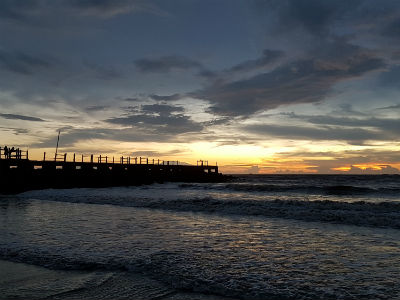
It is easy to spot a lighthouse in Batanes, as many are erected on the rugged hills. Many of the lighthouses offer a spectacular view overlooking the Pacific Ocean or the West Philippine Sea. On my first day, I had the chance to witness a breathtaking view of the sunset over the West Philippine Sea from a lighthouse located at Haidi Hills. The huge waves along the coast, moving in slow-motion-like rhythm, held my attention until they disappeared, crashing aggressively into the limestone cliffs.

2. Rolling Hills
The scenery of Batanes is a great combination of landscapes and seascapes. The rolling hills are a great example of that. Animals graze on the waves of grass moving in the strong wind. It is a rare place from which one can see the three inhabited islands (Batanes, Sabtang, and Itbayat) all at once, with the sea stretching endlessly all around.

3. Valugan Boulder Beach
When I wanted to escape to an even more remote place, this is where I came. The first time was during one of the guided tours, but later I visited the place many times again. On my last day, I came here to watch the sunrise.

4. Diura Beach - The Fountain of Youth

From there you can walk to the sandy beach. The mind-numbingly large waves that reach heights of more than a meter as they wash up on the shore are beautiful to watch. Walking further along the beach, you can find a few places where the waves do not hit with the same intensity, and you can dip yourself into the water. TIP: Take a short hike to the natural swimming pool ‘Rakuh-a-idi Spring’ (Fountain of Youth) in Mahatao, filled with cold fresh water from the mountain.
5. Sabtang
Sabtang, or the New Zealand of Batanes as locals have come to call it, is a place worth visiting for more than a day. The island offers so much to explore. The beautiful mountain scenery reminded me a lot of Norway, with its high hills rising sharply from the sea and beaches, many of which you can only reach on foot. This old village abounds with traditional houses built from stones, corals, and lime walls, and roofed with cogon grass. On your way around, you can meet an old lady making the traditional Ivatan dress out of cogon grass. It takes a week to make it, and for a few PHP you may try it on.


6. Itbayat
Unfortunately, I was not able to visit this island due to the weather conditions, but if you stay for more than 4-5 days you should definitely put this island on the list. I hope you get the chance to go there and share about it. ;)
To Sum It Up …
Batanes carved a special memory into my heart among all the places I have visited, and I can only hope to return soon. This remote place away from the mainland made me feel closer to nature again, and the genuine hospitality of local people made my day, every day. It reminded me of the value of culture and traditions, friendship, and it gave me the time and space to broaden my sense of freedom.

If you find this post useful you can use the map below to book your next accommodation (anywhere) through the affiliated link and I will receive a small commission ;) Thank you!